We like to keep yoou informed of happenings down here in our farms in the Americas. So check here because from time to time we will put out some valuable information.
Nullam lobortis nunc semper ipsum luctus ut viverra ante eleifend. Nunc pretium velit sed augue luctus accumsan. Aliquam laoreet consequat malesuada. Integer vitae diam sed dolor euismod laoreet eget ac…
Latin words, combined with a handful of model sentence structures, to generate Lorem Ipsum which looks reasonable.
Error: Contact form not found.
When you hear the word superfood, what comes to mind? A carrot in a cape? A nectarine with night vision?
Some foods are so nutritious it may seem like they have superpowers, but outside the marketing world, there actually is no such thing as a superfood — by scientific standards, at least. Despite the lack of evidence backing the touted health benefits of superfoods Between 2011 and 2015, there was a 202 percent increase in global sales of products marketed as “superfoods,” “superfruits,” or “supergrains”.
The superfood trend dates back almost a century, and may have all started with a banana. In the 1920s, the United Fruit Company ran a series of colorful ads on the health benefits of bananas, research detailing the benefits of bananas was published, and soon the tropical fruit became the first food labeled a superfood. More than 90 years later, bananas continue to be in the top three most imported fruits in the United States.
Acai berries, avocados, and blueberries are other examples of foods that have risen to superfood status, with health benefit claims that include reducing the risk of cancer and heart disease.
There are tons of different kinds of antioxidants found in fruits and vegetables. The varieties in color indicate different nutrients that confer some sort of health benefit — the more diverse your diet, the better.
Avocados Offer Heart-Healthy Poly- and Monounsaturated Fat
Avocado is a key component to a modern-day brunch staple, avocado toast, and contains a bevy of nutrients worth celebrating.
½ an avocado provides 29 milligrams (mg) of magnesium, or about 7 percent of the DV. Magnesium plays a role in regulating blood pressure and blood sugar, and magnesium deficiency is associated with a higher risk for type 2 diabetes. Avocado also provides fiber (6.8 mg per ½ fruit, offering 24 percent of DV), along with heart-healthy polyunsaturated and monounsaturated fat.
Pomegranate Is a Lesser-Known Heart Helper
Exotic fruits have long been revered as superfoods for their nutritional content and medicinal properties. Research shows that pomegranates, for example, may bolster heart health, and make a good candidate for dietary supplements that could prevent cardiovascular disease, according to one article.
Berries Help Keep the Brain Healthy and May Fend Off Alzheimer’s Disease
Acai berries are at the top of almost every superfood list, but just about any edible berry is worthy of superfood status. While all differ in nutritional value, blackberries, cranberries (the fresh, not dried, variety), strawberries, and raspberries, to name a few, are low-calorie, high in fiber, and packed full of antioxidants that help fight against cancer-causing free radicals, notes one study.
Acai berries and Blueberries, in particular, have a high number of anthocyanin pigments, which not only give them their rich color, but also act as powerful antioxidants that may lower the risk of diabetes, heart disease, and degenerative diseases like Alzheimer’s/.
Broccoli May Contribute to a Lower Risk of Cancer and Other Diseases
Cruciferous vegetables are heralded for health benefits such as lowering the risk of cancer and preventing heart attacks and stroke. Broccoli, Brussels sprouts, bok choy, cauliflower, cabbage, and maca (a Peruvian plant popular in North America as an energy booster, per research) are all types of cruciferous veggies that are full of fiber. Not only is fiber good for you,
This group of veggies contain compounds called indole glucosinolates, which help maintain the balance of healthy bacteria in your gut, and could reduce or prevent digestive conditions such as ulcerative colitis and Crohn’s disease, according to a preliminary study on mice. More studies in humans are needed, though.
Garlic and Onions Contribute to Healthy Blood Pressure Levels
They may be pungent (some even bring us to tears), but allium vegetables — chives, onions, garlic, leeks, and the like — deliver potent health benefits that contribute to their superfood status. Plus, they’re delicious. Once used to ward off the evil eye, garlic also has antibacterial and antiviral properties, according to research.
Studies have found allium vegetables may play a role in preventing cancer, and garlic in particular may benefit people living with diabetes, high cholesterol, and high blood pressure, according to a meta-analysis.
Mushrooms May Complement Breast Cancer Treatment, Though More Studies Are Needed
For centuries, mushrooms have been considered a superfood and are still used in traditional Chinese medicine to cleanse the body and promote longevity. Researchers have long studied the antibacterial, antioxidant, and anti-inflammatory properties of mushrooms, and mycotherapy — the use of mushrooms as medicine — is used as a complementary treatment for breast cancer. A 2022 review found mushrooms to have some anticancer effects, but the authors noted that this is based on only a couple of studies, and more robust clinical research is necessary.
Nuts and Seeds Supply a Powerful Punch of Plant Protein and Can Help Regulate Weight
Wellness gurus tout different superpowers for each nut — almonds for heart health, cashews for cognition, Brazil nuts for cancer — but all are a great source fat, fiber, and protein. Seeds like flaxseeds, chia seeds, and hemp seeds are easy to incorporate into your diet and are packed with vitamins and minerals.
While nuts are high in fat, they also keep you feeling full longer, and research has linked nuts to a lower risk of weight gain and obesity. Walnuts are at the top of the “supernut” list, with their antioxidant power helping to prevent diseases like certain types of cancer, according to one study.
Dark, Leafy Greens May Play a Role in Preventing Colorectal Cancer
Generally, the darker the color of a vegetable, the more nutrients it contains, says Wolfram. Dark, leafy greens like arugula, kale, collard greens, spinach, lettuce, and Swiss chard get their vibrant colors from chlorophyll, which keeps plants healthy, and the dietary fiber found in dark greens can decrease the risk of colorectal cancer. Carotenoids, another type of plant pigment, also act as antioxidants and are associated with lower cancer incidence, according to one review.
Ancient Grains Provide Healthy Carbs, Which Are Linked to Prevention of Many Diseases
Like superfoods, ancient grains are another buzzword that markets certain grains and seeds — like buckwheat, farro, and quinoa — as more nutritious than modern crops. The Whole Grains Council notes that grains that have been “largely unchanged over the last several hundred years” are considered ancient grains.
But to reap the benefits of grains, you don’t need to overthink it. Simply choose whole over refined grains. Compared with white rice, for example, brown rice provides more nutrients and fiber. School of Public Health.
Also, barley, bulgur wheat, brown rice, and oats are common whole grains that have the whole nutritional package, notes the Harvard school, and are packed with fiber, antioxidants, and vitamins. Brown rice specifically has a variety of phenolic acids with antioxidant properties that may help prevent conditions like type 2 diabetes, cancer, and heart disease, per one study.
Citrus Fruits May Help Prevent Age-Related Eye Disease
Citrus fruits have been crowned as superfoods because of their fiber and vitamin C content. The sweet and sour bite of citrus fruits like grapefruit, oranges, lemons, and limes is also low in calories and high in water. One study found that adults ages 50 and older who ate oranges every day had a 60 percent less chance of developing macular degeneration compared with those who didn’t eat oranges.
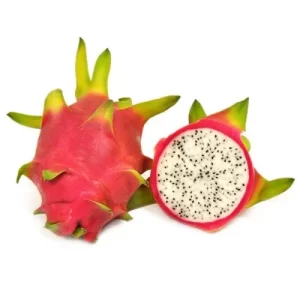
Dragon fruit is high in vitamin C and other antioxidants, which are good for your immune system
This fruit comes in red- and yellow-skinned varieties. The cactus originally grew in southern Mexico and South and Central America. The French brought it to Southeast Asia in the early 19th century.
Central Americans call it “pitaya.” In Asia, it’s a “strawberry pear.” Today, you can buy dragon fruit throughout the U.S.
Dragon fruit is juicy with a slightly sweet taste that some describe as a cross between a kiwi, a pear, and a watermelon. The seeds have a nutty flavor.
Dark Chocolate Is a Healthy Dessert That May Boost Your Mood
Unlike its sweeter milk and white chocolate counterparts, dark chocolate may offer health benefits. The cacao in dark chocolate is full of antioxidants, which may play a role in cancer prevention, heart health, and weight loss, according to research. A 1- or 2-oz serving of dark chocolate (with a minimum of 70 percent cacao) a day may have other health benefits, such as improving cognition, preventing memory loss, and boosting mood, reported one small study.
Sweet Potatoes Are a Gluten-Free, Healthy Source of Carbs That Help Fight Disease
Sweet potatoes have long been on the superfoods list, and for good reason. Carrots, beets, parsnips, potatoes, and yams are all types of root vegetables that have sustained human life for hundreds of years — and through many a harsh winter.
Nutritious, easy to grow, and with an exceptionally long life span (some can last months, if stored properly), root vegetables are packed with healthy carbs and starches that provide energy.
One review suggested that this root veggie may contribute to preventing diabetes, obesity, cancer, and other health conditions thanks to their anti-inflammatory, antioxidative, and antimicrobial properties.
As a bonus, root veggies including sweet potatoes are also gluten-free, making a great dietary alternative for those who are gluten intolerant or have celiac disease.
Beans and Legumes May Help Reduce High Cholesterol
As far as superfoods go, the beans and legume family possess the power of plant-based protein. Unlike food from many animal sources, beans and legumes are low in saturated fats — which can raise cholesterol levels and contribute to heart disease — and yield health benefits that animal products don’t..
Chickpeas, edamame, lentils, peas, and the thousands of other bean types are densely packed with nutrition, and research has found the high levels of fiber and vitamins in them can help with weight loss and regulating blood sugar levels, according to one study. Peanuts are also in the legume family as well, making this nut look-alike a great, low-carb snack.
What Are Acai Berries?
Many of you have probably never heard of the Akai Berry, On Finca Florida of Ecuador we produce the berry in our Palm Zone.
Here is a bit of info on the berry and its benefits.
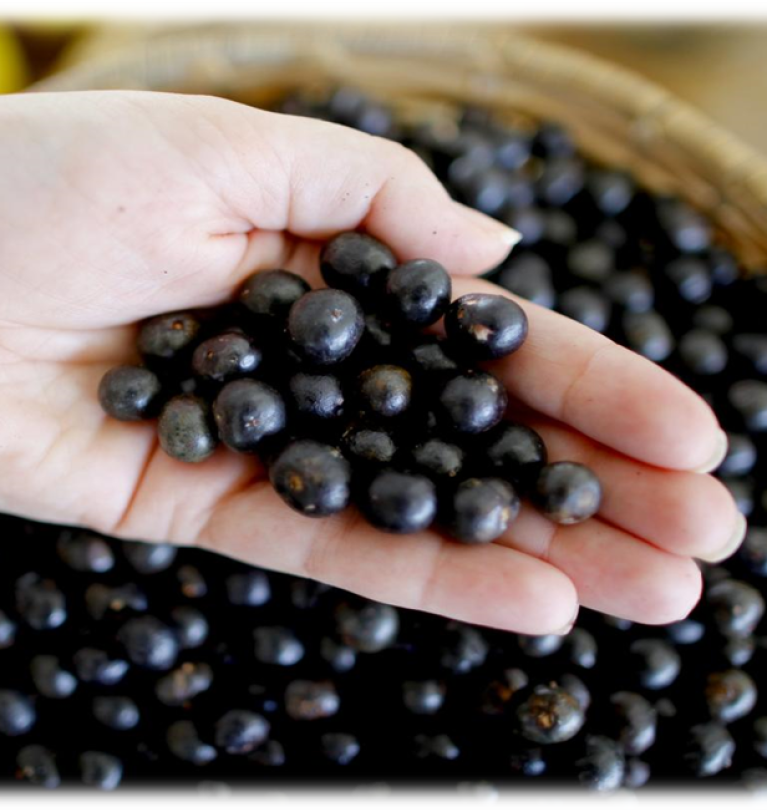
Acai berries are 1-inch (2.5-cm) round fruits that grow on acai palm trees in the rainforests of Central and South America. They have a dark purple skin and yellow flesh surrounding a large seed.
Because they contain pits like apricots and olives, they’re technically not a berry, but rather a drupe. Nevertheless, they’re commonly referred to as berries.
In the Amazon rainforest, acai berries frequently accompany meals.
To make them edible, they are soaked to soften the tough outer skin and then mashed to form a dark purple paste.
They have an earthy taste that’s often described as a cross between blackberries and unsweetened chocolate.
Fresh acai berries have a short shelf life and aren’t available outside of where they are grown. As an export, they are sold as a frozen fruit purée, dried powder or pressed juice.
Acai berries are also sometimes used to flavor food products, including jelly beans and ice cream, while some non-food items like body creams contain acai oil.
5 Impressive Health Benefits of Acai Berries
Acai berries contain many antioxidants, healthy fats, and fiber. Their nutritious composition makes them an excellent addition to a healthy diet.
Acai berries are a South American “superfruit.” They’re native to the Coastal and Amazon regions, where they’re a staple food.
However, they’ve recently gained popularity globally and are praised for being particularly beneficial to health and well-being.
This dark purple fruit certainly packs a lot of nutrition and may even have some health benefits, including the 5 described in this article.
SUMMARY: Acai berries grow on acai palm trees in the Amazon rainforest. They’re processed into a pulp before eating.
1. They’re Nutrient-Dense
Acai berries have a unique nutritional profile for a fruit, as they’re somewhat high in fat and low in sugar.
100 grams of frozen fruit pulp has the following nutritional breakdown (1Trusted Source):
Calories: 70
Fat: 5 grams
Saturated fat: 1.5 grams
Carbs: 4 grams
Sugar: 2 grams
Fiber 2 grams
Vitamin A: 15% of the RDI
Calcium: 2% of the RDI
According to a Venezuelan study, acai berries also contain some other trace minerals, including chromium, zinc, iron, copper, manganese, magnesium, potassium and phosphorus (2Trusted Source).
But some of acai’s most powerful health benefits come from plant compounds.
The most notable one among these is anthocyanins, which give acai berries their deep purple color and act as antioxidants in the body.
You can also find anthocyanins in other blue, black and purple foods, such as black beans and blueberries.
SUMMARY: Acai berries contain healthy fats and low amounts of sugar, as well as many trace minerals and plant compounds, including anthocyanins.
2. They’re Loaded With Antioxidants
Antioxidants are important because they neutralize the damaging effects of free radicals throughout the body.
If free radicals are not neutralized by antioxidants, they can damage cells and lead to a number of diseases, including diabetes, cancer and heart disease.
Acai berries have an incredibly high amount of antioxidants, edging out other antioxidant-rich fruits like blueberries and cranberries.
The antioxidant content of foods is typically measured by an Oxygen Radical Absorbance Capacity (ORAC) score.
In the case of acai, 100 grams of frozen pulp has an ORAC of 15,405, whereas the same amount of blueberries has a score of 4,669.
This antioxidant activity comes from a number of plant compounds in acai, including anthocyanins.
In 2008, researchers gave 12 fasting volunteers acai pulp, acai juice, applesauce or a drink with no antioxidants at four different times and then tested their blood for antioxidants.
Both the acai pulp and applesauce raised participants’ antioxidant levels, which means that the antioxidant compounds in acai are well-absorbed in the gut.
It also indicates that acai pulp is a better source of antioxidants than acai juice.
SUMMARY: Acai is incredibly rich in antioxidants, boasting three times the amount found in blueberries.
3. They May Improve Cholesterol Levels
Animal studies have suggested that acai could help improve cholesterol levels by decreasing total and LDL cholestero.
And it’s possible that it could have a similar effect in humans.
A 2011 study had 10 overweight adults eat acai smoothies twice daily for one month. Overall, they had lower total and “bad” LDL cholesterol at the end of the study.
However, there were a few drawbacks to this study. It was small, had no control group and received its funding from a primary supplier of acai.
While more research is needed, it’s possible that the anthocyanins in acai could be responsible for their positive impact on cholesterol levels, since studies have linked this plant compound to improvements in HDL and LDL cholesterol.
In addition, acai contains plant sterols, which prevent cholesterol from being absorbed by your body (10Trusted Source).
SUMMARY: Many animal studies and at least one human study have suggested that acai may help lower blood cholesterol levels.
4. They May Have a Possible Anti-Cancer Effect
While no one food is a magic shield against cancer, some foods are known to stop cancer cells from forming and spreading.
Both test-tube and animal studies have revealed this sort of anti-cancer effect in acai.
In mice, acai pulp has reduced the incidence of colon and bladder cancer .
However, a second study in mice found that it had no effect on stomach cancer.
Researchers have concluded that acai could have a role in treating cancer in the future, yet more research is needed, including in humans.
SUMMARY: In animal and test-tube studies, acai has shown potential as an anti-cancer agent. More studies are needed to determine its effect in humans.
5. They Could Boost Brain Function
The many plant compounds in acai could also protect your brain from damage as you age ).
Several studies have shown this kind of protective effect in lab rats
The antioxidants in acai counteract the damaging effects of inflammation and oxidation in brain cells, which can negatively affect memory and learning.
In one study, acai even helped improve memory in aging rats .
One of the ways in which the brain stays healthy is by cleaning up cells that are toxic or no longer working, a process known as autophagy. It makes way for new nerves to form, enhancing communication between brain cells.
As you age, this process works less efficiently. However, in lab tests, acai extract has helped stimulate this “housekeeping” response in brain cells.
SUMMARY: Acai may counteract the damaging effects of inflammation and oxidation in the brain and help stimulate its “housekeeping” response.
Possible Drawbacks to Acai Berries
Given that acai is a healthy, antioxidant-rich fruit, there aren’t a whole lot of drawbacks to eating it.
However, one word of caution is to not overestimate its associated health claims.
Fusce ac pharetra urna. Duis non lacus sit amet lacus interdum facilisis sed non est. Ut mi metus, semper eu dictum nec, condimentum sed sapien. Nullam lobortis nunc semper ipsum luctus ut viverra ante eleifend. Nunc pretium velit sed augue luctus accumsan.
Aliquam laoreet consequat malesuada. Integer vitae diam sed dolor euismod laoreet eget ac felis. Donec non erat sed elit bibendum sodales. Donec eu cursus velit. Proin nunc lacus, gravida mollis dictum ut, vulputate eu turpis. Sed felis sapien, commodo in iaculis in, feugiat sed enim. Sed nunc ipsum, fermentum varius dignissim vitae, blandit et ante.Maecenas sagittis, lorem sed congue egestas, lectus purus congue nisl, ac molestie enim ligula nec eros. Sed leo tortor, tincidunt sit amet elementum vel, eleifend at orci. Maecenas ut turpis felis. Donec sit amet quam sem, et aliquet est.
Quisque nisl lectus, accumsan et euismod eu, sollicitudin ac augue. In sit amet urna magna. Curabitur imperdiet urna nec purus egestas eget aliquet purus iaculis. Nunc porttitor blandit imperdiet. Nulla facilisi. Cras odio ipsum, vehicula nec vehicula sed, convallis scelerisque quam. Phasellus ut odio dui, ut fermentum neque.
Lorem ipsum dolor sit amet, consecte adipiscing elit. Integer aliquam mi nec dolor placerat a condimentum diam mollis. Ut pulvinar neque eget massa dapibus dolor.
Curabitur at vestibulum sem. Aliquam vehicula neque ac nibh suscipit ultrices. Morbi interdum accumsan arcu nec scelerisque. Phasellus eget purus nulla. Suspendisse quam est, tempor quis consectetur non, interdum vitae diam. Pellentesque volutpat mollis ligula in laoreet. Aenean est dui, sagittis in consequat at, adipiscing at risus. Sed suscipit, est vitae aliquam molestie, sem dolor dignissim leo, eget imperdiet enim urna in justo. Mauris pulvinar tortor lorem. Aliquam sed nisl in ipsum tincidunt ultrices.
HEADING
Pellentesque volutpat mollis ligula in laoreet. Aenean est dui, sagittis in consequat at, adipiscing at risus. Sed suscipit, est vitae aliquam molestie, sem dolor dignissim leo, eget imperdiet enim urna in justo. Mauris pulvinar tortor lorem. Aliquam sed nisl in ipsum tincidunt ultrices.
Integer vitae diam sed dolor euismod laoreet eget ac felis
Integer vitae diam sed dolor euismod laoreet eget ac felis
Integer vitae diam sed dolor euismod laoreet eget ac felis
Integer vitae diam sed dolor euismod laoreet eget ac felis
Integer vitae diam sed dolor euismod laoreet eget ac felis
HEADING
Pellentesque volutpat mollis ligula in laoreet. Aenean est dui, sagittis in consequat at, adipiscing at risus. Sed suscipit, est vitae aliquam molestie, sem dolor dignissim leo, eget imperdiet enim urna in justo. Mauris pulvinar tortor lorem. Aliquam sed nisl in ipsum tincidunt ultrices.
HEADING
Nullam commodo lobortis nibh, vitae accumsan velit dapibus sed. Nunc ac sem eu libero pretium faucib. Quisque et semper odio. Praesent tortor ligula, imperdiet sed aliquet ut, pharetra at nisi. Etiam sit amet molestie est. Donec id turpis vitae leo viverra adipiscing at sed nisi. Donec ut justo nunc. Vivamu bibendum erat ac nunc sollicitudin lacinia. Phasellus sed lacus magna.
HEADING
Nullam commodo lobortis nibh, vitae accumsan velit dapibus sed. Nunc ac sem eu libero pretium faucib. Quisque et semper odio. Praesent tortor ligula, imperdiet sed aliquet ut, pharetra at nisi. Etiam sit amet molestie est. Donec id turpis vitae leo viverra adipiscing at sed nisi. Donec ut justo nunc. Vivamu bibendum erat ac nunc sollicitudin lacinia. Phasellus sed lacus magna.
Get in touch
Latin words, combined with a handful of model sentence structures, to generate Lorem Ipsum which looks reasonable.








 Antioxidants are important because they neutralize the damaging effects of free radicals throughout the body.